


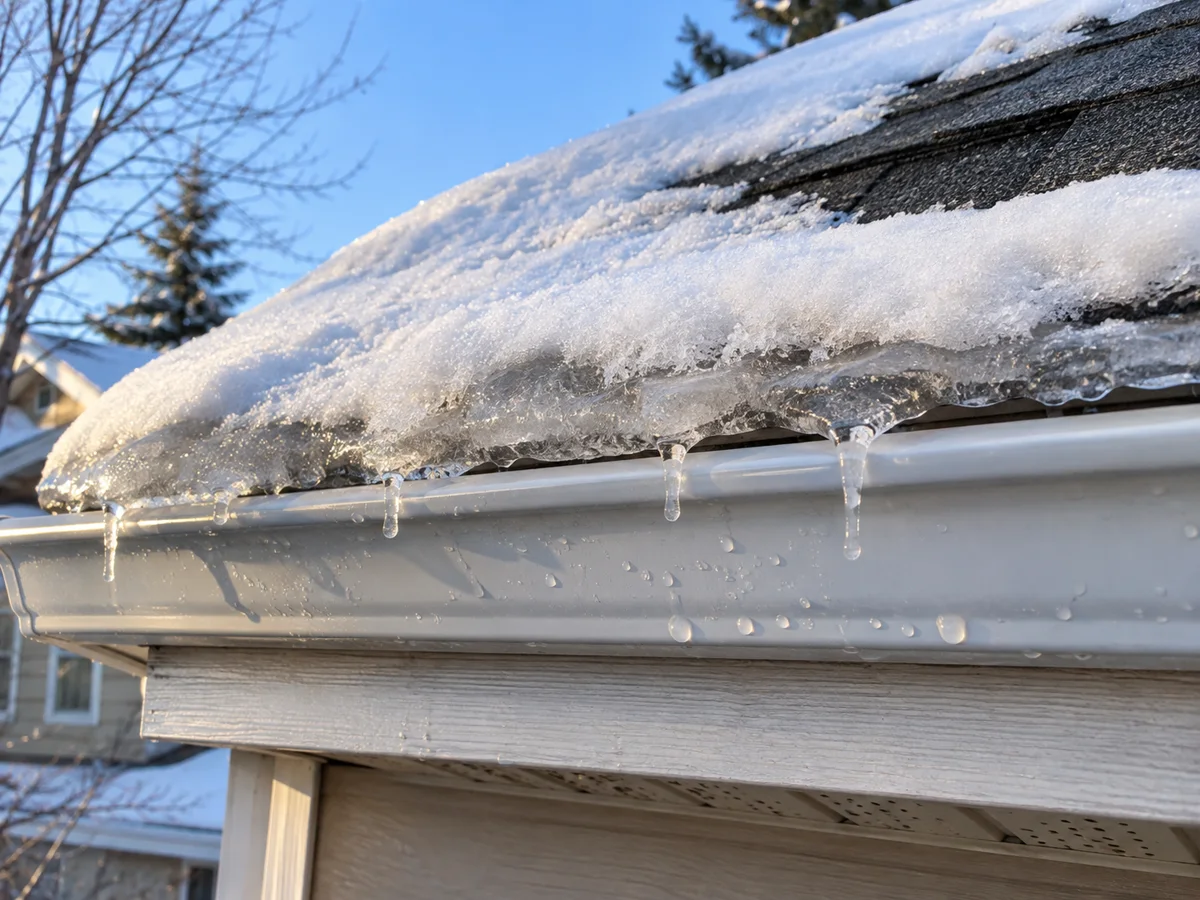
An ice dam forms when melted roof snow refreezes near a colder roof edge and obstructs drainage. Water can collect behind that ice and find its way beneath the roofing. For an Edmonton homeowner, the useful question is what is causing the melting and where the water is going—not simply whether the shingles look old.
Roof rejuvenation does not correct attic heat loss or remove an ice dam. Start by identifying the winter roofing problem, then assess the shingles separately.
How does an ice dam develop?
Picture snow on a roof above a heated home. Heat reaching the roof can melt part of that snow. When meltwater reaches a colder area near the eaves, it can freeze again. Continued melting and refreezing can build a ridge of ice, leaving water behind it.
The roof edge can stay colder because it extends beyond the heated walls. Sunshine and changing weather also affect melting, so the cause needs to be assessed for the particular roof.
Warm air escaping from the home into the attic is one important source of unwanted heat. Natural Resources Canada’s roofs and attics guide identifies air sealing and adequate insulation as central to prevention. Ventilation is part of the roof-system assessment, rather than a substitute for addressing heat leakage.
What should you look for from the ground?
Look for changes and patterns you can describe to a contractor:
- A ridge or repeated buildup of ice along an eave.
- Meltwater appearing behind an ice buildup or in an unusual location.
- Large or recurring icicles, especially where they were not present before.
- New ceiling stains, damp interior finishes or water appearing during a thaw.
- The same roof section melting while nearby sections remain snow-covered.
Icicles alone do not establish that water is entering your roof. Similarly, a ceiling stain does not identify the source. Photograph the location and note when it appeared, including whether the weather was warming or snow was melting.
Keep people clear of areas where ice could fall. If water is entering the home, arrange a roofing assessment promptly instead of waiting for the next seasonal check.
What should a professional assessment cover?
A recurring ice problem needs more than a glance at the gutter. Ask the contractor to connect the outside symptoms with the roof assembly and the rooms below it.
Heat and air leakage
Ask whether openings through the ceiling, attic access or service penetrations are allowing household air into the attic. Adding insulation over an unresolved opening is different from sealing that air pathway.
Insulation and ventilation
Have the condition and distribution of insulation checked, together with the intended ventilation paths. Ask whether insulation or stored material is obstructing those paths. The Building America Solution Center describes air sealing, insulation and ventilation as coordinated parts of ice-dam prevention.
Roofing and drainage
Ask a roofer to check the affected roofing, flashing and water-entry points. Clearing ice may address an immediate obstruction, but the next freeze can recreate the problem if the source of melting remains.
The Government of Canada’s snow and ice guidance recommends professional review of insulation and roof ventilation when ice dams persist.
Should you chip the ice off yourself?
Climbing onto a snowy roof or striking ice beside shingles can create another problem. Keep your observations on the ground and ask a qualified contractor how the buildup can be managed without damaging the roof. Discuss both immediate water control and the work needed to prevent a repeat.
Where does roof rejuvenation fit?
Rejuvenation is a separate shingle-preservation decision. It does not air-seal a ceiling, improve insulation, reopen ventilation paths or repair water-damaged roof components.
Once the winter problem has been diagnosed and necessary repairs addressed, an assessment can establish whether the remaining asphalt shingles are suitable for preservation. Ask about the specific product, shingle-manufacturer guidance and written coverage before choosing treatment. Learn about roof rejuvenation in Edmonton or read how Alberta weather affects roofing.
Keep a useful record for the next visit
Save the date, photos from a consistent ground-level position, affected rooms, weather conditions and any previous repair information. Ask the contractor to record the likely cause, immediate work and longer-term corrective work separately.
For questions about aging asphalt shingles after the ice-dam problem has been assessed, contact Bright Green Roof Edmonton. A clear diagnosis helps you spend on the work your roof actually needs.


